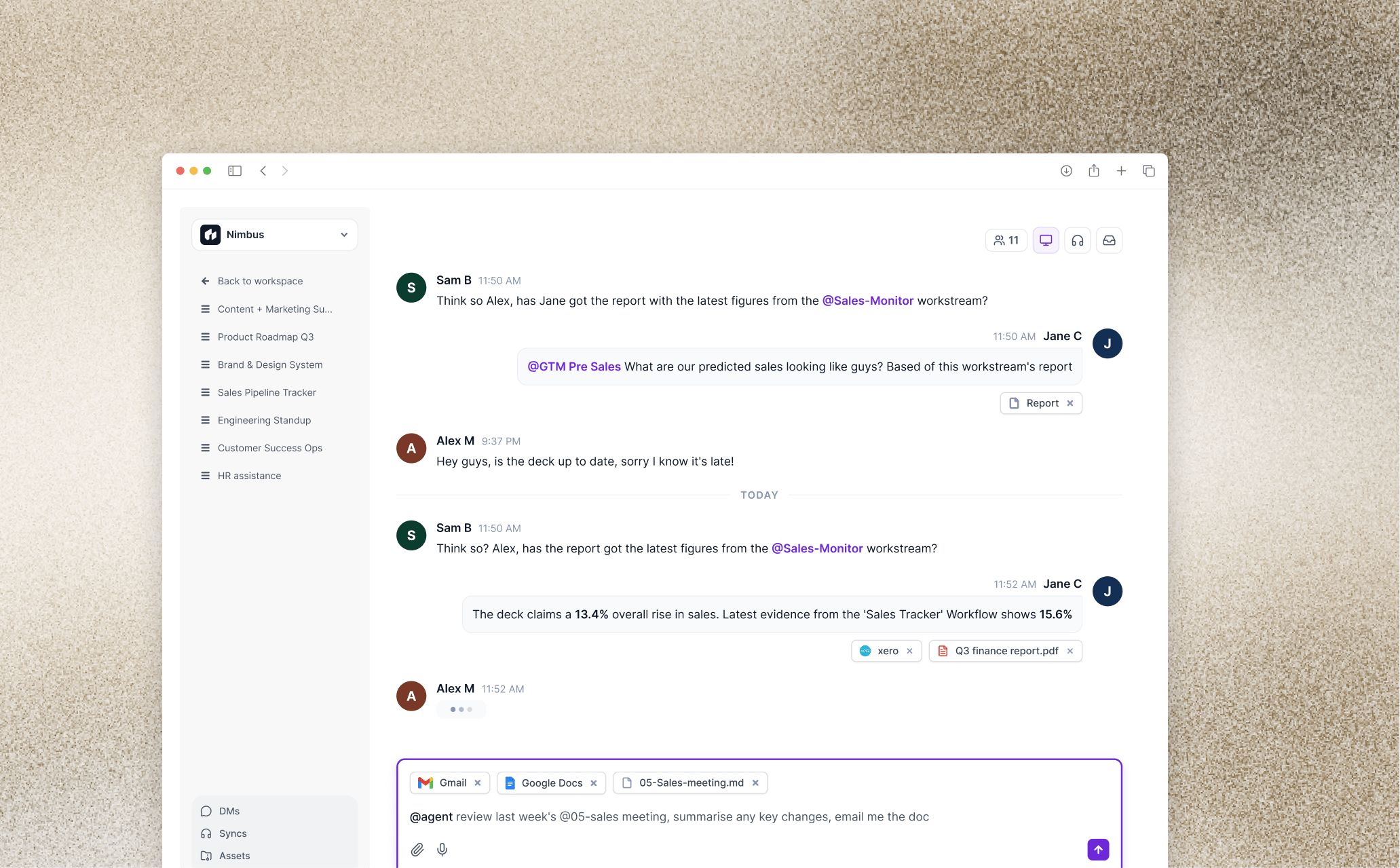
Ask anything with the team already in the room.
Perception-first chat grounded in your Lifecycle Graph, wiki, and live integrations.

The workspace hub above every workstream. Orient in plain English, see activity across the org, then hand off into governed execution.
Shared room for the workspace - chat, activity, and workstream handoff on one surface.
Perception-first chat grounded in your Lifecycle Graph, wiki, and live integrations.
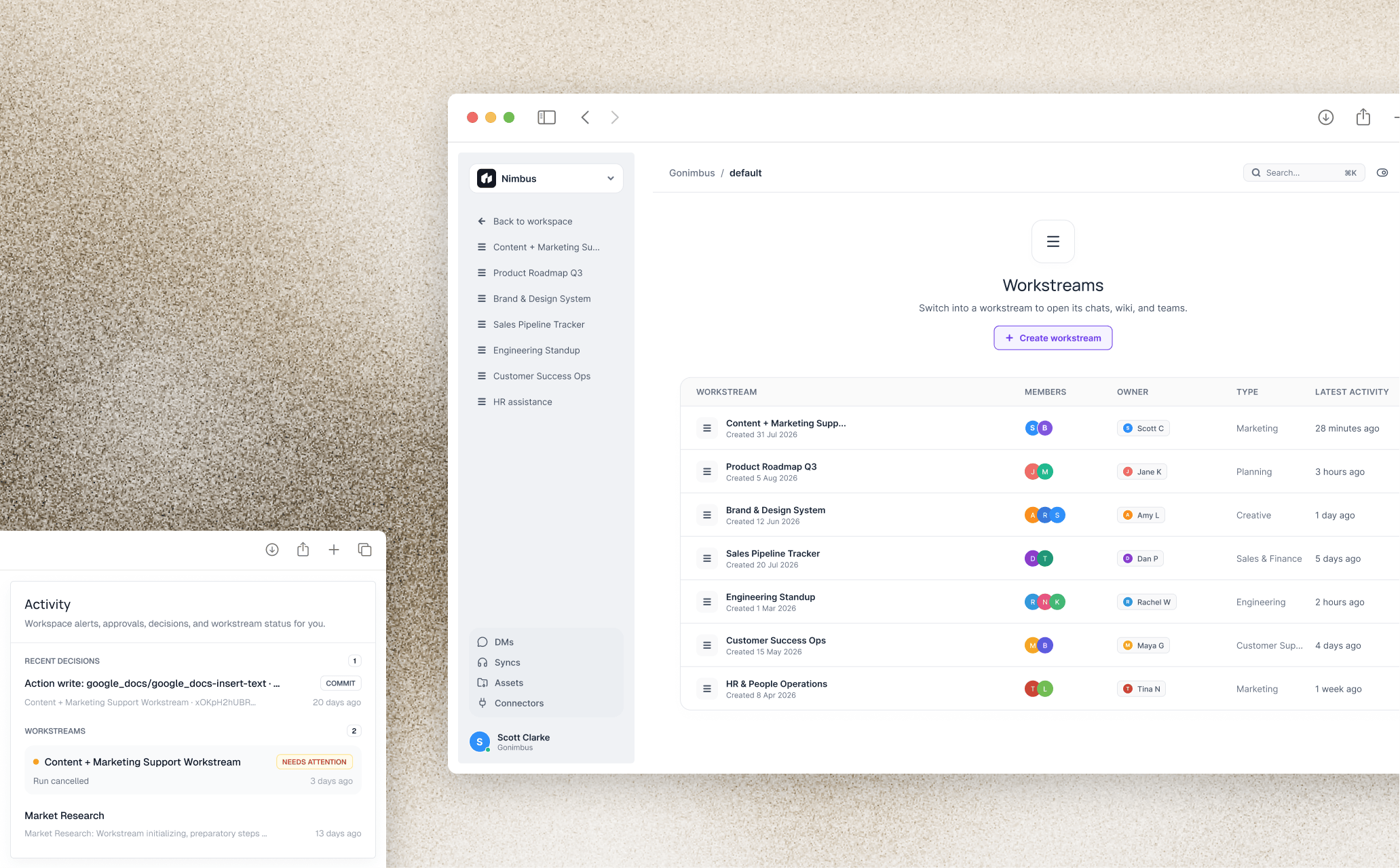
Status, approvals, and the workstream list sit next to the same hub conversation.
Conflux is the shared room for the whole workspace - not another project thread. Ask across context, scan what is moving, then open a workstream when the work needs a canvas.
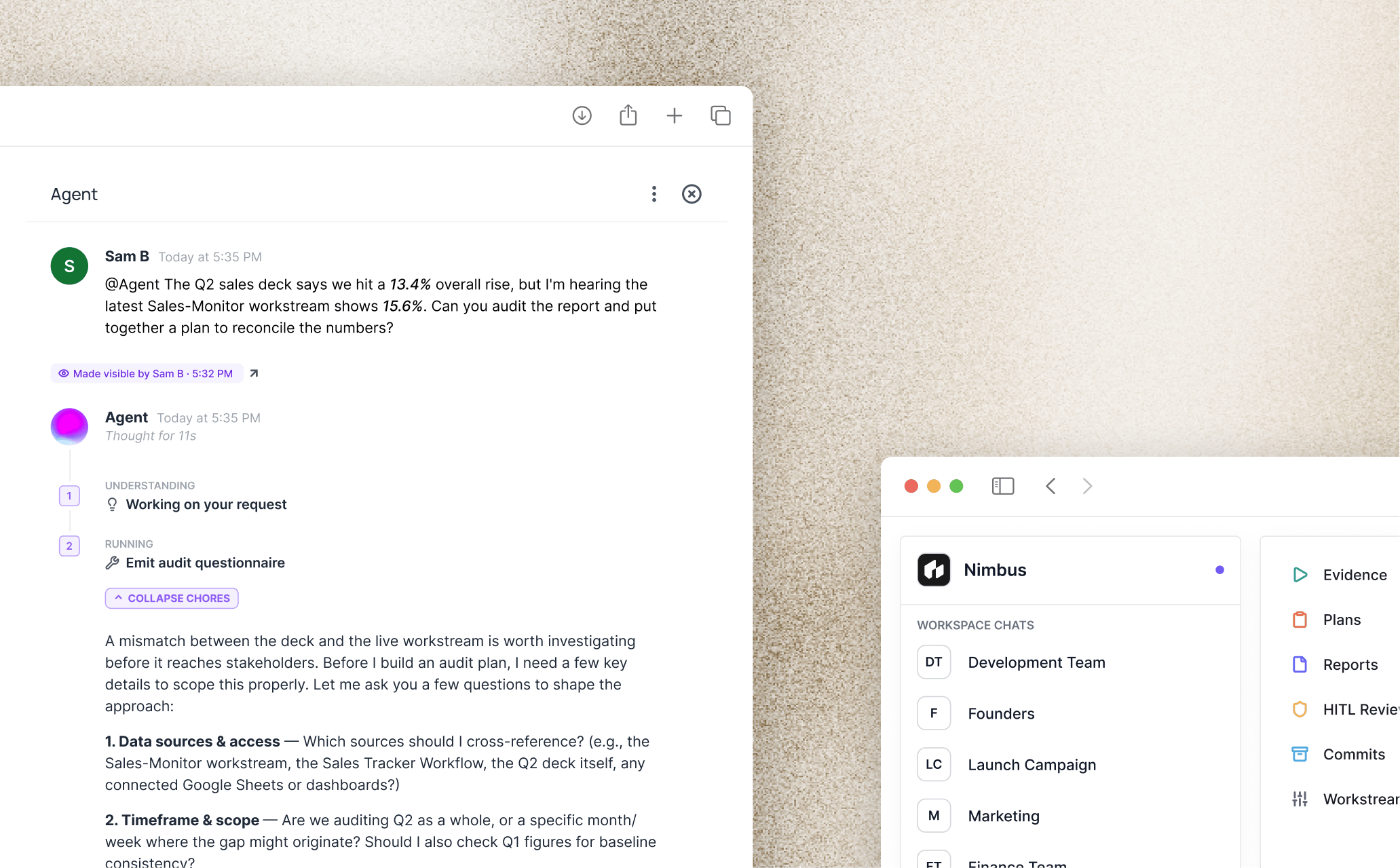
Conflux keeps human collaboration and agent activity in one surface so operators do not lose the plot between Slack threads and agent runs.
See status, runs, and approvals move without hopping tabs for every canvas.
Attachments stay as chat cards in Conflux - display and discuss, not silent agent tool context.
Orientation stays read-aware. Execution and write-backs still gate through workstreams and approvals.
Evidence, transcripts, and attachments stay in Conflux so you can retrieve what was said without reconstructing a Slack export.
Conflux answers "what is going on?" Workstreams answer "get this done." Start a sync when the conversation needs to go live.
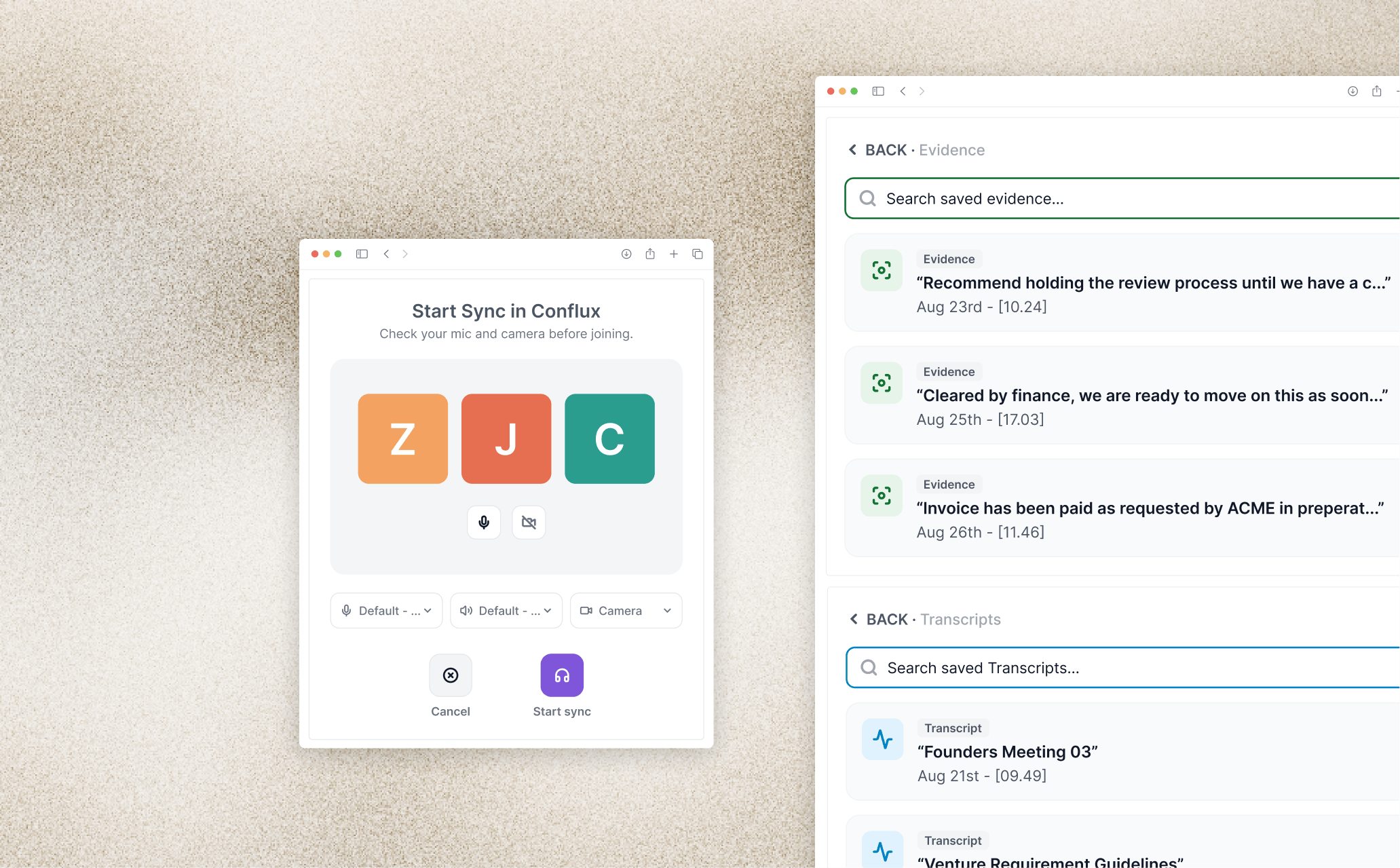
Orientation, activity, and workstream launches sit inside the same Nimbus loop - wiki, connectors, agent teams, governance, and the Lifecycle Graph.
Answers pull from institutional memory instead of a generic chat model with no tenant context.
Workstreams and agent teams stay one click away when Conflux surfaces a gap worth closing.
Execution still lands in Decision History - Conflux is the front door, not a side channel around governance.